
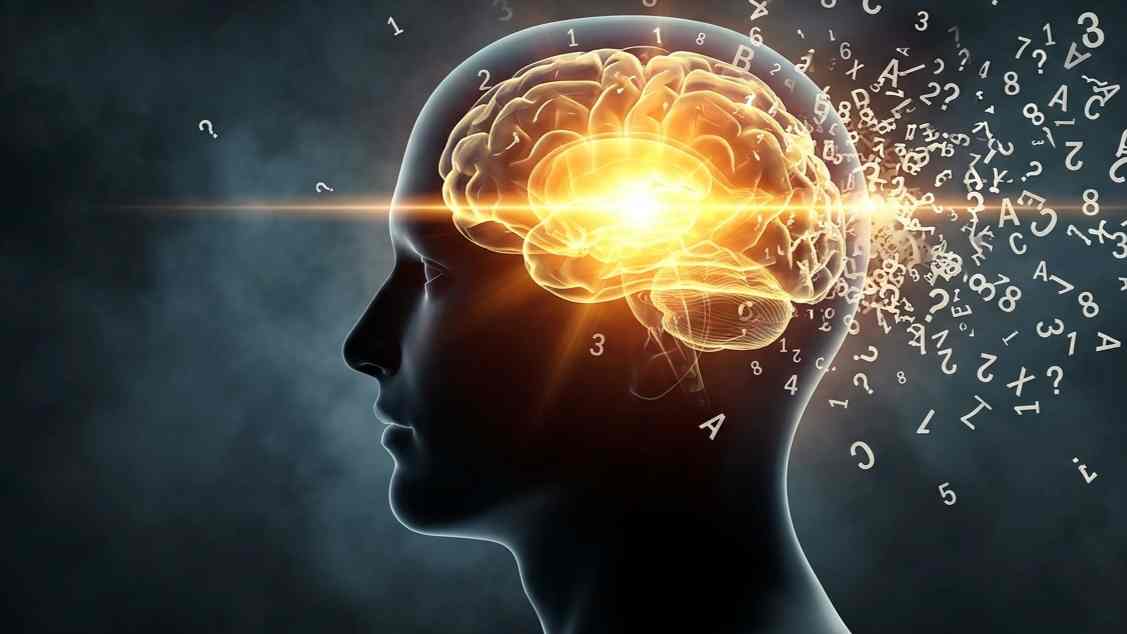
What Is Ego?
Ahamkara This is originally a word from the Sanskrit language, which is made up of “Aham” and “Kāra.” Aham and Kāra mean creating. When a person creates his identity, it is called ego.
The one who knows the world and experiences the body creates a particular identity for himself, the basis of which is belief, only belief. But the person does not even know it as a belief; he mistakes it for knowledge.
This is the fundamental error: that what is merely an assumption, a belief, is taken to be reality. And once a belief is mistaken for knowledge, it becomes almost impossible to question it, because the person feels that whatever he knows is reality itself, leaving no room for doubt.
This is why the ego appears so firm and permanent, whereas in reality it is nothing more than a chain of beliefs that the body and mind have constructed over time through the experiences of the senses.
How Can This Ego Be Recognized?
Ego is an identity formed on the basis of the modifications (vrittis) of the mind-stuff (chitta). In the Yoga Darshana of Maharshi Patanjali, which gives the Yoga Chitta Vritti Nirodha Sutra, the cessation of the aham-vritti is also included, because it is from here that ego later arises. The cessation of these vrittis is considered necessary because until the vrittis become quiet, the roots of the ego also cannot be cut. The vritti is the very seed from which the tree of ego grows.
When you see the world and experience it through your senses, a vritti arises within that says, “What I am experiencing is what I am.” And ego does not remain limited only to this; it continues to expand further.
It is formed by the self-ignorant person after knowing and understanding the world through the senses. For example, if someone is a follower of a particular community and another person says something about that community which he does not like, he takes it as a personal insult. What is important to notice here is that what was said about the community has no direct connection with that person’s own existence, yet he projects it onto himself because he has connected his identity with that community.
This very attachment is the nature of ego: it takes any attack upon that as an attack upon itself.
That is, first self-ignorance, then the identity created after knowing the material world, which is ego, and then emotion, that is, the suffering that arises within due to being deluded by it. This is a sequential process that begins with ignorance and ends in suffering, and this cycle continues endlessly until the original ignorance is recognized.
The nature of ego also does not always remain the same; it keeps changing. It is formed dozens of times throughout the day and attaches itself to dozens of different things. Sometimes it becomes attached to the body, sometimes to thoughts, sometimes to relationships, sometimes to achievements, and sometimes to the ownership of an object.
But at the root of it all lies the understanding that the knowledge of the world obtained through the senses is real, and that in this world, I exist as a body. This fundamental belief is the basis of all the branches of ego, no matter in what form they appear.
The ego is such that the person deluded by it lives life according to his thoughts, because his identity has been formed within his mind. He considers his own thoughts to be true and makes decisions according to them, experiences happiness and sorrow according to them, and forgets that this identity itself is a product of his own mind, not an eternal truth.
In Vedanta, this ego is called mithyā (illusory), but the ordinary person considers it to be true because the basis of ego is the external world, and the external world appears so direct and solid through the senses that doubting it seems almost impossible.
The one who is wise knows that ego actually covers the intellect only because of the absence of Self-knowledge. It has no independent existence; rather, it is merely a shadow of ignorance that falls upon the intellect and veils it.
Being the experiencer of the world, the ego itself becomes attached to the world, and because of this attachment, inner impurities arise. The very first thing that begins is the search for completeness, because the person deluded by ego is always incomplete. This incompleteness is so deeply rooted in his nature that throughout his life he continues trying to fill it in one form or another. But because he is ignorant, that search moves only toward the world and remains confined there.
The illusion that appears due to the absence of Self-knowledge is called life. This illusion also appears only because of one’s own ignorance.
When the Buddha says that life is suffering, he is speaking of the life of this ego-bound person, the life that remains endlessly entangled in the search born of incompleteness and never attains true fulfillment.
Can I Renounce the Ego?
You can renounce the ego, but keep one thing in mind: renouncing the ego is not like renouncing a physical object, such as when you go to bathe and take off your clothes. Ego is not a garment that can simply be removed and set aside. It is something far subtler and deeper than that.
The ego is like an illusion.
Because it is so, to renounce it one only has to know it. Simply by that, you discover what the ego really is, or what it really was.
For this, self-observation is required. Just as darkness does not need to be forcibly removed, but disappears on its own the moment light is brought in, in the same way there is no need to make a forceful effort to renounce the ego. One only has to know it as it is and observe it carefully, and that alone is sufficient.
When it is understood that what I had taken to be my identity was in fact nothing more than a web of beliefs and vrittis, it begins to loosen on its own. This knowledge is not an event of a single moment but the result of continuous self-observation, in which one repeatedly sees at what moment, upon which experience, and upon which thought the ego is establishing its hold, and recognizes that this hold is nothing more than a belief.
