
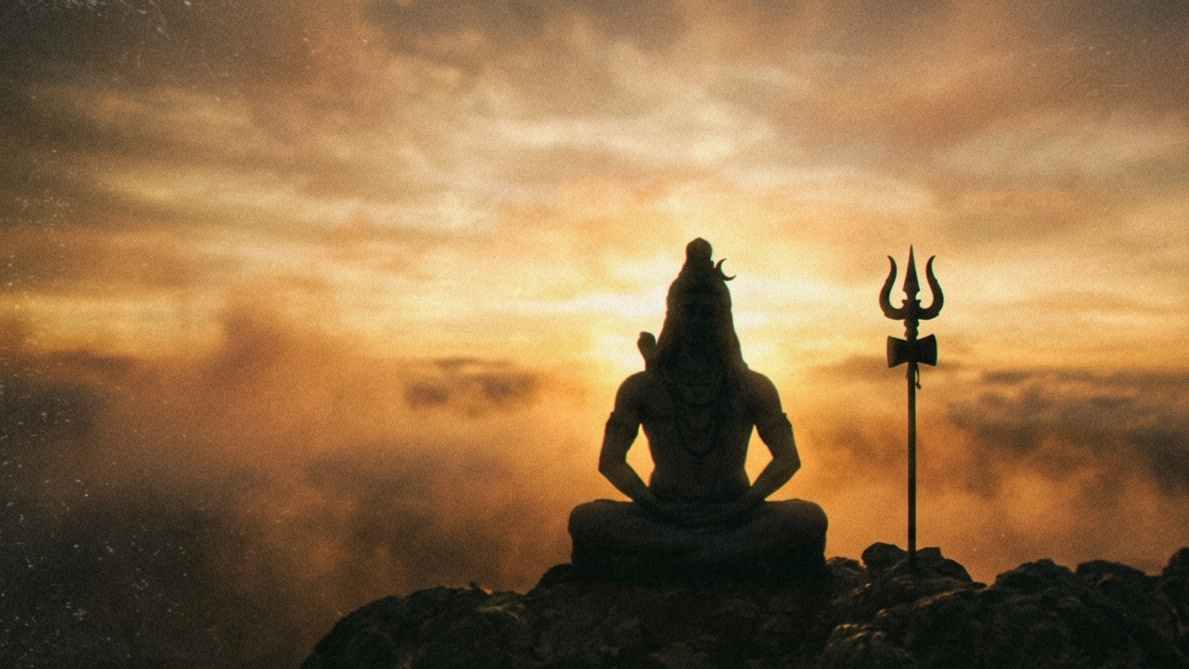
In this article, I have presented the complete verses, English meaning, and spiritual teachings of the famous hymn of Lord Shiva, the ‘Namami Shamishan’ – Rudrashtakam.
Along with this, the Saguna (form with attributes) and Nirguna (form without attributes) aspects of Shiva described in the hymn, its stotra, and the life-applicable wisdom obtained from it have also been explained, so that readers may understand its true meaning.
Verses and meaning of the ‘Namami Shamishan’ hymn
Namamīśamiśāna nirvāṇarūpaṁ, vibhuṁ vyāpakaṁ brahmavedasvarūpam. nijaṁ nirguṇaṁ nirvikalpaṁ nirīhaṁ, cidākāśamākāśavāsaṁ bhajeham॥
Meaning: I bow to the Lord of all lords, the form of Spiritual Liberation, all-pervading, infinite, and the embodiment of Brahman and the Vedas. I worship that Supreme Self who is of his own nature, who is without attributes, without distinctions, without desires, who is the space of consciousness, and whose abode is as infinite as the sky.
Nirākāramoṅkāramūlaṁ turīyaṁ, girājñānagōtītamīśaṁ girīśam. karālaṁ mahākālakālaṁ kṛpālaṁ, guṇāgārasansārapāraṁ natōham॥
Meaning: I bow to the formless one, the root of Om, the state of Turiya, beyond speech and knowledge, the Lord and the Lord of the mountain (Shiva). I bow to that fierce form, the death of even Mahakala, the compassionate one, the storehouse of virtues, and the one who takes beings across the ocean of worldly existence.
Tuṣārādrisaṅkāśagauraṁ gabhīraṁ, manobhūtakōṭiprabhāśrīśarīram. sphuranmauḷikalolinīcārugaṅgā, lasadbhālabālendu-kaṇṭhe bhujaṅgā॥
Meaning: Whose fair complexion is like the snowy mountain, who is extremely profound, whose divine body shines like millions of love-gods. From whose matted locks the beautiful Ganga flows, on whose forehead the crescent moon shines, and around whose neck serpents reside.
Calatkundaḷaṁ bhrūsunetraṁ viśālaṁ, prasannānanaṁ nīlakaṇṭhaṁ dayālam. mṛgādhīśacarmāmba-raṁ muṇḍamālaṁ, priyaṁ śaṅkaraṁ sarvanāthaṁ bhajāmi॥
Meaning: I worship that beloved Shankara who has swinging earrings, beautiful eyebrows and large eyes, whose face is always cheerful, who is Nilkantha and compassionate. He wears the skin of the lion (deer), wears a garland of skulls, and is the Lord of all beings.
Pracaṇḍaṁ prakṛṣṭaṁ pragalbhaṁ pareśaṁ, akhaṇḍaṁ ajaṁ bhānukoṭiprakāśam. tryaḥśūlanirmūlanaṁ śūlapāṇiṁ, bhajehaṁ bhavānīpatiṁ bhāva-gamyam॥
Meaning: I worship that fierce, supreme, excellent Lord who is complete, unborn, and shining like millions of suns. He destroys the three types of suffering, holds a trident in his hand, is the husband of Bhavani, and is attainable through pure devotion.
Kalātīta-kalyāṇa kalpāntakārī, sadā sajjanānandadātā purārī. cidānanda-sandoha mohāpahārī, prasīda prasīda prabho manmathārī॥
Meaning: I bow to that Lord who is beyond all arts and time, who is auspicious and the destroyer at the end of the cosmic cycle. He always gives joy to the virtuous, is the destroyer of the three cities (Tripura), the embodiment of consciousness and Spiritual Bliss, and the remover of illusion. O Lord, O enemy of Kamadeva, please be pleased, be pleased.
Na yāvad umānātha-pādāravindaṁ, bhajantiha loke pare vā narāṇām. na tāvat sukhaṁ śānti saṁtāpanāśaṁ, prasīda prabho sarvabhūtādhivāsaṁ॥
Meaning: Until humans in this world or the next do not worship the lotus feet of the Lord of Uma, they do not attain true happiness, peace, or the destruction of suffering. O Lord who resides in all beings, please be pleased.
Na jānāmi yogaṁ japaṁ naiva pūjāṁ, natō’haṁ sadā sarvadā śambhu tubhyam. jarājanma-duḥkhaugha-tā-pyamānaṁ, prabho pāhyāpanna-mamīśa śambho॥
Meaning: I do not know yoga, chanting, or proper worship. O Shambhu, I always and forever bow to you. I am being tormented by the sufferings of old age, birth, and the ocean of worldly pains. O Lord, O Ish, O Shambhu, protect me, I have taken refuge in you.
About the ‘Namami Shamishan’ hymn
The ‘Namami Shamishan’ hymn is a very beautiful hymn dedicated to Lord Shiva. In it, a wonderful description of both the Saguna (with form) and Nirguna (formless) aspects of Lord Shiva is found.
In this hymn, the beautiful form of Lord Shiva has been described. His beautiful eyebrows, large and compassionate eyes, ever-pleasant face, Nilkantha form, compassionate nature, lion-skin garment, garland of skulls, swinging earrings, the sacred Ganga flowing from his matted locks, the serpent adorning his neck, and the trident held in his hand—all these are described in a very enchanting manner.
Along with this, this hymn also describes the Nirguna, formless Brahman form of Lord Shiva, which is beyond all definitions. He is said to be beyond speech, intellect, and ordinary thought.
In this hymn, Lord Shiva is described as the embodiment of Brahman, Nirvana, all-pervading, the essence of Brahman and the Vedas, self-effulgent, without attributes, without distinctions, without desires, the space of consciousness, infinite like the sky, unborn, indivisible, beginningless, endless, compassionate, auspicious, the destroyer at the end of the cosmic cycle, and the giver of joy to the virtuous.
They are described as the remover of illusion, the one who helps cross the ocean of existence, the husband of Bhavani, the bearer of the trident, the destroyer of Kamadeva, the remover of the three types of suffering, the destroyer of worldly fear, the giver of liberation, and the ultimate refuge of all beings.
Who is the composer of the ‘Namami Shamishan’ hymn?
There is disagreement among scholars regarding the composer of the ‘Namami Shamishan’ hymn, because there is no authentic historical evidence available about it.
But according to traditional popular belief, Goswami Tulsidas is said to have composed the Rudrashtakam as a hymn in praise of Lord Shiva before beginning the writing of the Ramcharitmanas.
The story says that when Tulsidas ji went to the Kashi Vishwanath temple dedicated to Lord Shiva to have darshan of Lord Shiva, he sang this stotra to receive the grace of Shiva.
Lord Shiva became pleased and blessed him to describe the life of Lord Rama. Because of this, the Rudrashtakam is considered a very powerful hymn of Lord Shiva.
What teachings does the ‘Namami Shamishan’ hymn give?
The ‘Namami Shamishan’ hymn teaches that the mind should worship Shivatva, that is, that Supreme Truth which is beyond the illusory world of Maya. In other words, this hymn directly guides the mind toward liberation.
We living beings, due to the bondage of the physical body, become influenced by Maya. Due to ignorance, human consciousness keeps seeking freedom from inner suffering and peace in inert matter and material objects. But real liberation is not there. True liberation lies in becoming free from material attachments.
We have discussed spiritual liberation in detail in another article, in which it has been explained that until a human being recognizes his bonds, removes them, and moves forward on the path of liberation, he cannot attain true spiritual bliss.
If you deeply understand the meaning of the ‘Namami Shamishan’ hymn, you will realize that it is an invocation of Lord Shiva. In it, the devotee prays to Lord Shiva to destroy all his sufferings, because Shiva alone is liberation.
Lord Shiva is a symbol of pure consciousness, which is beyond Maya—consciousness that has transcended its own conditioned bonds and crossed material nature.
In this hymn, Shiva is called Nirvikalpa, meaning free from all distinctions and duality, the very form of the Self Knowledge, and Nirvana itself.
They are beyond birth and death, unborn, eternal, and imperishable. Attaining Shiva is attaining immortality.
What does it mean to worship Shiva?
If you are worshipping Shiva, it means that you are no longer worshipping the transient objects of the world. Now your goal is self-realization. This is a rebellion against ignorance and the blind beliefs of the mind.
Worshipping Shiva also means that your attraction is no longer limited only to material things. The thirst for that Truth, which is beyond material existence, has awakened within you.
Now your journey is not toward death and destruction, but toward immortality and a Truth that exists beyond the limits of time.
The meaning of worship is not only singing devotional songs or performing music. Singing songs is certainly an expression of devotion, but it is not the complete meaning of worship.
If you want to understand the true meaning of worship in detail, you can read our other article on this subject.
Read : Shiva Swarnamala Stuti “Ishagirisha Naresha” Lyrics, Meaning and Information
